
Overview
This article explains how centralized space management tools boost occupancy, streamline operations, and guide reconfiguration and pricing. It covers allocation methods, workflows, analytics, and best practices for facility managers running coworking and flexible office portfolios.
How does coworking space management software increase utilization?
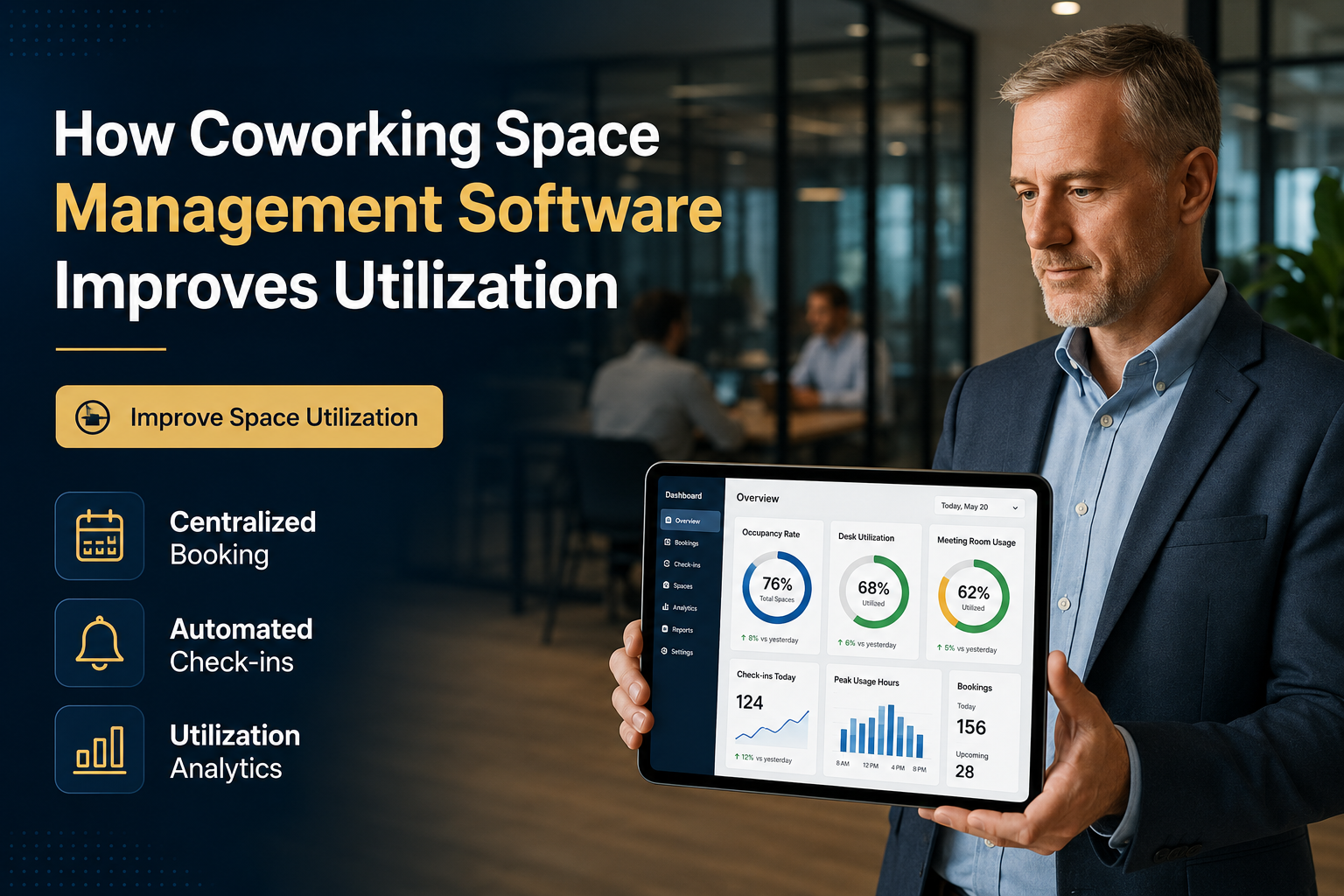
By centralizing reservations, automating allocations, and providing real-time occupancy analytics, coworking space management software reduces no-shows, fills idle slots, and enables dynamic pricing and reallocation. Automated check‑ins, waitlists, and calendar integrations convert unused capacity into billable hours and improve same‑day utilization across zones and properties.
Benefits of coworking space management software for facility managers
Operational efficiency
Centralized booking and automated workflows cut admin time and errors. Automated check‑in/out, calendar syncs, and billing reconciliation reduce manual tasks and speed tenant responses.
- Automated billing and reconciliation
- Calendar integrations to prevent double bookings
- Notifications and cleaning triggers to cut turnaround
Financial and occupancy outcomes
Space management software improves revenue per square foot by increasing seat turnover and enabling dynamic packaging. Analytics show high‑demand desks and slow windows for targeted pricing.
- Convert underused private desks into hourly hot‑desks
- Set premium pricing for high‑demand resources
- Use promotions to fill low‑demand slots
Tenant experience and retention
Mobile portals, team booking, and automated access provisioning create a predictable, low‑friction experience. Fewer access issues and clearer booking rules increase renewals.
Implementing flexible workspace booking to maximize occupancy
Policy and configuration steps
Define minimum/maximum durations, cancellation windows, and membership permissions before launch. Clear rules ensure fair access and predictable capacity.
- Recurring reservation limits and cancellation policies
- Tiered permissions by membership and team
- Waitlist and auto‑reallocation configuration
Integration and automation
Integrate with calendars, access control, and billing systems so cancellations free rooms and badge access is provisioned instantly. Automation reduces gaps between bookings and increases same‑day utilization.
Use cases
- Hourly hot‑desk shifts and day passes to capture walk‑ins
- Event bookings to monetize common areas and build community
- Dedicated desk plans with sharing rules to improve predictability
Optimizing coworking desk allocation and layout
Smart allocation methods
Use allocation algorithms that account for team adjacency, proximity, and amenities. Prioritize team clustering and reserve high‑demand desks for members with matching needs.
- Prioritize team clustering to support collaboration
- Reserve desks with monitors for client‑facing members
- Blend reserved and flexible desks based on trends
Space planning workflow
Leverage heatmaps and occupancy trends to pilot modular layouts for 4–8 weeks. Measure booking uplift before wider rollouts to minimize disruption and validate ROI.
Best practices
Balance privacy and collaboration zones, choose flexible furniture, and iterate quickly. This lowers renovation costs and keeps offerings aligned with tenant demand.
Measuring and improving tenant space utilization with analytics
Key metrics to track
Track utilization rate, average booking lead time, no‑show rate, revenue per usable seat, and zone occupancy trends to guide pricing, packaging, and layout decisions.
Reporting and dashboards
Real‑time occupancy maps and historical reports enable fast operational decisions. Set alerts for chronic underutilization or capacity breaches and build executive dashboards for portfolio planning.
Actionable insights
Use analytics to identify underperforming zones for repurposing—e.g., convert excess private offices into flexible suites—and tailor membership plans to actual usage patterns.
Shared office management workflows and best practices
Standard operating procedures
Document SOPs for booking governance, access provisioning, cleaning cadence, and SLA‑driven room setup. SOPs reduce ambiguity and enable scale.
Coordination across teams
Align facilities, community, and IT around booking rules and integrations. Regular operational reviews, driven by utilization dashboards, ensure continuous improvement.
Compliance and safety
Use software to enforce capacity limits, enable touchless access, and maintain audit trails. Integrations with IWMS/CAFM/EAM tools support maintenance tracking and asset planning.
Conclusion
Coworking space management software gives facility managers the visibility and automation needed to convert idle space into measurable value. Centralized booking, smart allocation, and utilization analytics enable better layout, pricing, and tenant experiences while boosting financial performance.
Key Takeaways
- Centralized booking and analytics convert capacity into revenue.
- Flexible booking and smart allocation increase utilization and reduce no‑shows.
- Continuous measurement and iterative layout changes sustain long‑term improvement.
Discover how eFACiLiTY can optimize your facility management. Schedule a demo today.
FAQ
How quickly can coworking space management software show utilization improvements?
Most teams see measurable gains within 30–90 days after implementing clear booking rules and using analytics to fill underused slots. Early wins typically include fewer no‑shows, more same‑day bookings, and clearer occupancy patterns that enable quick pricing or layout adjustments.
Can the software integrate with access control and billing systems?
Yes. Modern coworking space management software integrates with single sign‑on, badge systems, payment gateways, and accounting tools to automate access provisioning, billing, and reconciliation. These integrations reduce manual work, speed member onboarding, and maintain audit trails for compliance.
What metrics should facility managers prioritize to evaluate success?
Prioritize utilization rate, revenue per usable seat, no‑show rate, average booking lead time, and zone‑specific occupancy trends. These metrics identify bottlenecks, inform pricing and packaging, and measure the impact of layout or policy changes to validate ROI from operational improvements.




