
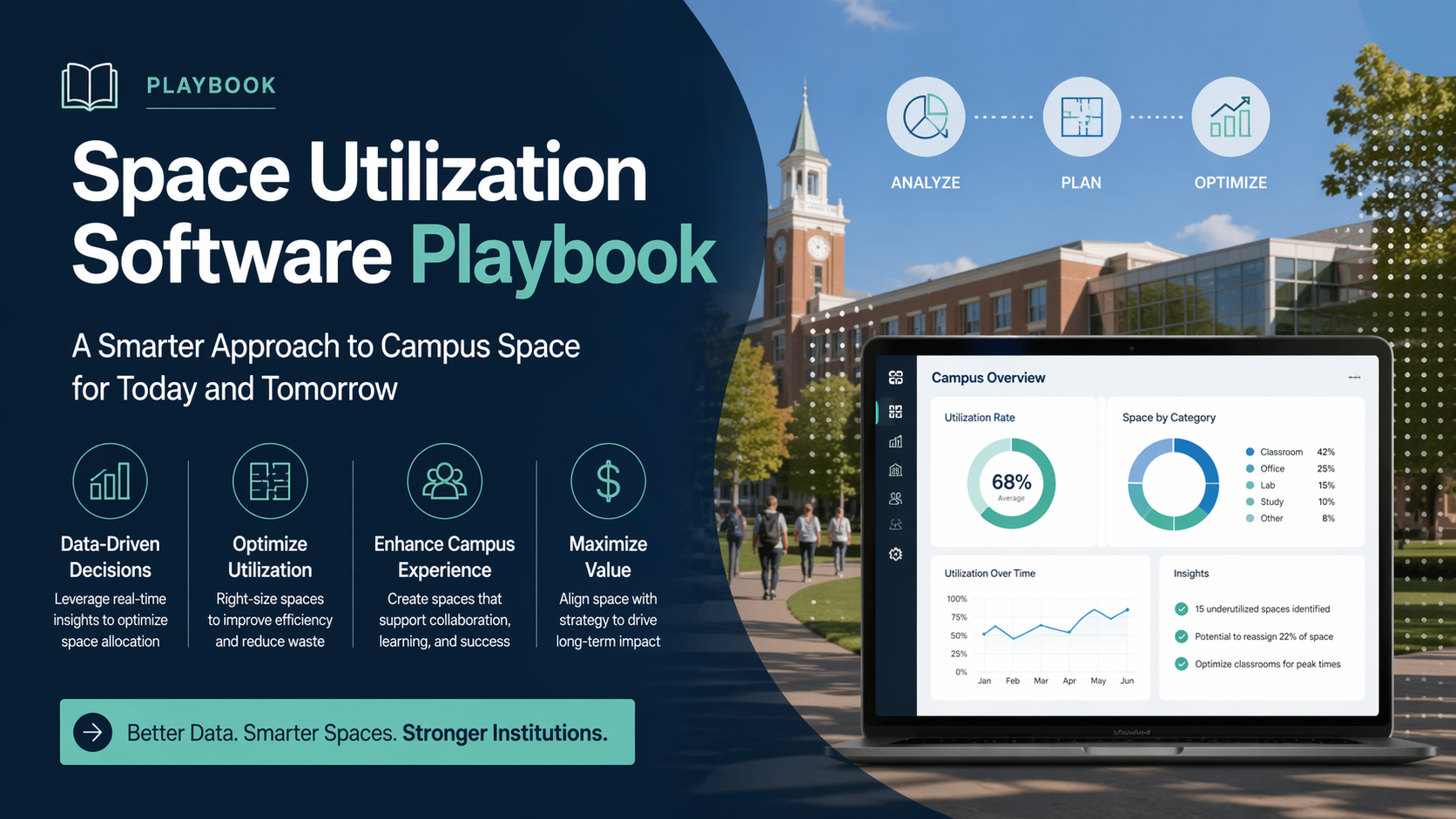
Empty classrooms quietly erode campus budgets and obscure strategic planning. This playbook shows how space utilization software, combined with sensors, scheduling data, and forecasting workflows, converts occupancy signals into timetable adjustments, consolidation plans, and measurable cost savings—without disrupting course delivery or academic access.
How can space utilization software reduce classroom vacancies on campus?
Space utilization software fuses schedule exports, sensor counts, and attendance to reveal underused rooms, test timetable shifts, and model consolidation scenarios. That insight lets registrars and facility managers reassign classes, reduce operating costs, and repurpose space while preserving service levels and meeting academic needs.
Why classroom vacancies persist: diagnose root causes
Common root causes
- Decentralized scheduling and misaligned timetables that leave low‑demand blocks.
- Inaccurate room metadata—wrong capacities, missing equipment, or misclassified room types.
- Booking friction: long approvals or restrictive rules that discourage flexible use.
- Seasonal cycles and ad hoc events that create peaks and troughs without trend analysis.
Implementing space utilization software: step-by-step for campus facility managers
Phase 1 — Assess and prepare
Inventory every classroom in your IWMS or space management system. Map data gaps across schedule exports, historic enrollment, booking logs, and sensor coverage. Define KPIs—utilization rate, seat‑fill, peak vs. off‑peak—and run a 12‑week audit combining registrar schedules with attendance to baseline performance.
Phase 2 — Choose tools and sensors
Compare ceiling passive sensors, badge swipes, and Wi‑Fi analytics. Prioritize platforms that support data fusion so scheduled vs. actual usage reconciles cleanly. Require real‑time dashboards, historical reporting, and IWMS/CAFM/EAM integration for operational handoffs.
Phase 3 — Pilot, iterate, scale
- Pilot in representative areas: lecture halls, seminar clusters, and labs.
- Validate occupancy thresholds by comparing sensors with rosters and manual counts.
- Refine booking rules with department feedback and roll out changes term‑by‑term.
Measuring success: utilization rate metrics and KPIs to track
Core KPIs
- Classroom utilization rate = hours used ÷ available hours.
- Seat‑fill percentage = average attendees ÷ room capacity.
- Peak vs. off‑peak splits and cost‑per‑used‑seat.
Use trend charts and heatmaps to spot persistent underused blocks. Present ROI scenario dashboards projecting savings from consolidation and service reductions to registrars and deans for approval.
Forecasting and capacity planning with occupancy trend tracking
Forecasting framework
Inputs include historical utilization, enrollment projections, and course demand. Start with rolling averages and seasonal adjustments, then test time‑series or simple ML models. Outputs are term‑by‑term scenarios recommending keep, repurpose, or consolidate actions.
Scenario planning and policy levers
- Consolidation: close or repurpose underused rooms.
- Timetable optimization: shift classes to high‑utilization blocks.
- Flexible booking: create shared pools and eased approvals.
Best practices and pitfalls when deploying workspace usage analytics on campus
Privacy, compliance, and stakeholder buy‑in
Anonymize occupancy data and align monitoring with FERPA and campus IT policies. Communicate clear benefits—better scheduling, lower costs, improved student experience—and involve registrars, faculty reps, and IT early to increase adoption.
Technical and operational pitfalls
- Don’t rely on a single data source—combine sensors, booking logs, and Wi‑Fi.
- Account for edge cases: labs, performance venues, and seminar rooms.
- Avoid waiting for “perfect” data; prioritize iterative wins and transparent metrics.
Use cases and quick wins for facility managers
Quick wins
- Right‑size recurring low‑attendance courses to smaller rooms.
- Convert rarely used rooms into hybrid learning hubs or collaboration spaces.
- Cluster evening classes into core blocks to reduce evening services and costs.
Longer‑term strategic moves
Create cross‑department booking pools, use forecasted utilization to justify renovation or divestment, and present quantified ROI to finance and academic leadership to unlock capital.
Conclusion
Facility managers can reduce classroom vacancies by pairing space utilization software with phased implementation, clear KPIs, and forecasting workflows. Data‑driven pilots, stakeholder alignment, and incremental policy changes turn occupancy signals into timetable adjustments, consolidation, and cost savings without undermining academic programs.
Key Takeaways
- Space utilization software turns occupancy, schedule, and sensor data into actionable forecasts for capacity planning.
- Pilots, KPIs, and stakeholder engagement unlock quick wins and justify larger consolidation efforts.
- Combine multiple data sources and privacy‑conscious analytics for reliable forecasts and measurable ROI.
Discover how eFACiLiTY can optimize your facility management. Schedule a demo today.
FAQ
What features should schools look for in space utilization software?
Look for real‑time occupancy analytics, IWMS/Space Management integration, sensor and booking data fusion, customizable utilization metrics, and forecasting modules. Ensure role‑based dashboards for registrars and finance, easy data export, and APIs for downstream reporting and capital planning.
How accurate are occupancy tracking tools like sensors or Wi‑Fi analytics?
Accuracy varies: ceiling infrared or lidar sensors and badge systems provide high detection fidelity, while Wi‑Fi analytics scale well but are less precise for seat‑level counts. Use sensor fusion and pilots to calibrate thresholds and validate counts against class rosters.
How quickly can campuses expect ROI from workspace usage analytics?
Timetable tweaks and booking policy changes can show measurable occupancy improvements within one academic term. Savings from consolidation or capital reallocation typically materialize over one to two academic years after forecasts, stakeholder approvals, and operational changes are implemented.
How should campuses handle privacy and compliance when monitoring occupancy?
Anonymize and aggregate occupancy data to avoid personally identifiable information. Align monitoring with FERPA and campus IT policies, publish clear data‑use statements, and involve legal and IT stakeholders early to ensure compliant, trustable deployment.




