
How can a workspace reservation system help hotels monetize meeting rooms and banquets?
A workspace reservation system centralizes availability, pricing, and reporting so hotels can sell unused meeting rooms and banquets by the hour or as packaged events. It enables instant bookings, automated upsells (catering/AV), channel distribution, and analytics to optimize rates, preserve premium banquet dates, and reduce manual coordination.
Monetization strategies: convert unused space into measurable revenue
Price and packaging models
Offer hourly, half-day, full-day rates and local subscription packages. Create event bundles that combine room, F&B, and AV at a discounted package price to increase average booking value.
- Example: Day-office for travelers — hourly rate for a 50-seat meeting room.
- Example: Half-day meeting bundle — room + coffee breaks + projector at fixed fee.
Dynamic and demand-based pricing
Use peak/off-peak rates, minimum booking durations, and lead-time discounts. Configure automatic rate rules and blackout periods to protect high-value banquet dates while promoting weekday corporate specials.
Demand generation and distribution
Sell directly on your hotel website, list on local marketplaces, and form corporate partnerships for recurring bookings. Use channel managers to avoid double-bookings and push inventory to SME-focused marketplaces.
Revenue tracking and optimization
Track utilization by hour, average booking value, upsell attach rates, and RevPAR uplift for event spaces. Convert idle hours into clear revenue opportunities with data-driven pricing.
How to implement a workspace reservation system in your hotel
Evaluation checklist
Choose a system with PMS API/connectors, POS invoicing and corporate billing support, interactive floor plans, calendar sync, channel manager compatibility, and basic IWMS integration.
Pilot → Scale rollout
Pilot on one floor or a single function room to measure bookings, average booking value, and operational load. Iterate SOPs and then expand by segment (banquets → meeting rooms → day offices).
Change management & staff workflows
Train front desk, events, and F&B teams on confirmations, deposits, setup SLAs, and turn-down procedures. Document roles for on-site confirmations and exception handling to minimize manual workload.
Technical setup and third-party integrations
Integrate payment gateways for deposits, connect channel managers, deploy digital signage, and enable QR check-in and door access. These integrations reduce friction and support automated upsell flows.
Key features to look for in a workspace reservation system
Core booking functionality
Real-time availability, calendar sync, waitlists, instant confirmations, group bookings, recurring reservations, and corporate accounts to support hotel use cases.
Resource mapping and floor plans
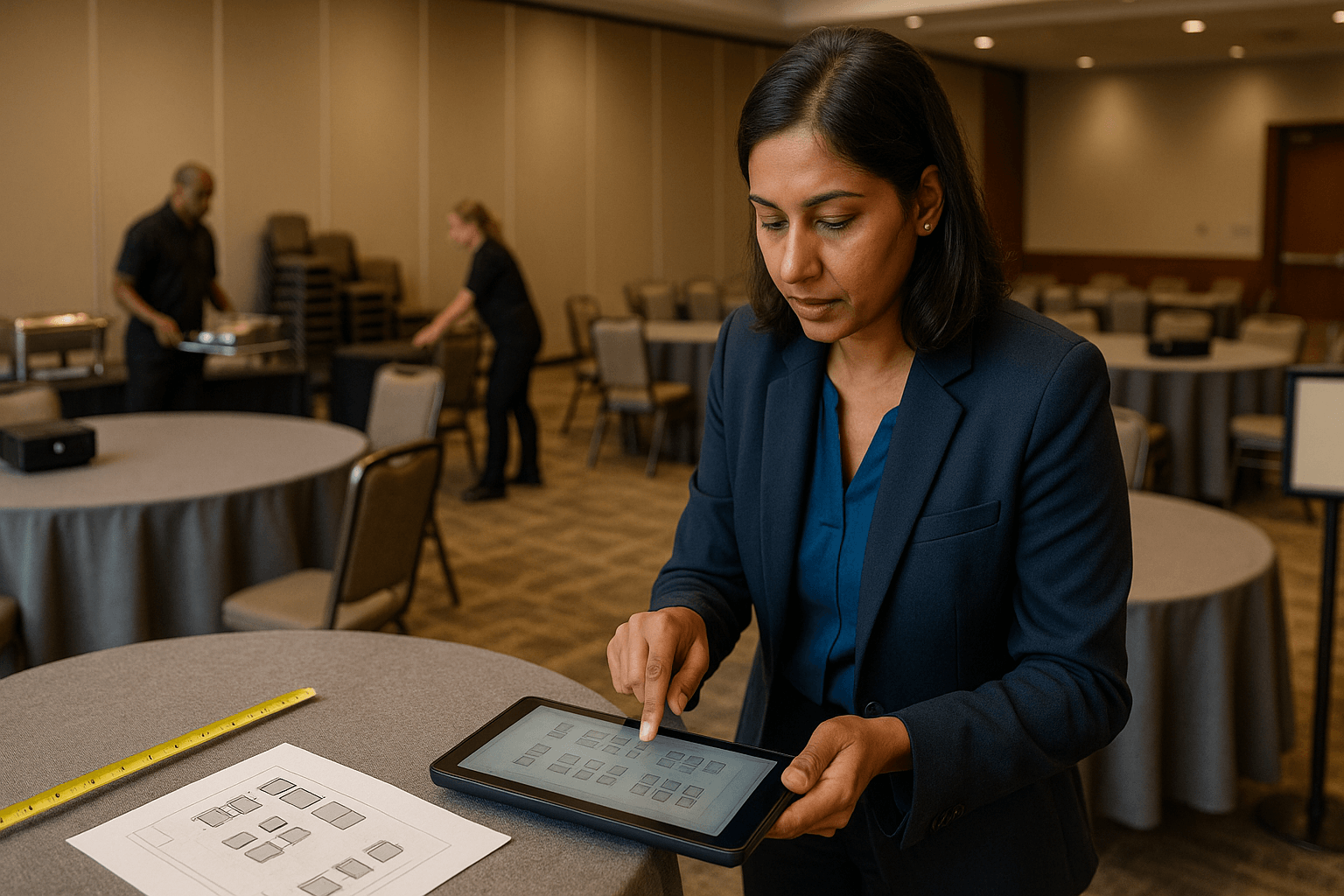
Interactive layouts and banquet seating templates speed setup, reduce errors, and support multiple room configurations for events and day offices.
Payments, invoicing and billing rules
Support deposits, cancellation policies, and corporate invoicing to automate accounts receivable and reduce billing disputes.
Analytics and reservation tracking tools
Utilization dashboards, revenue per sqm, lead time, and no-show tracking drive pricing and marketing decisions for meeting room booking strategies.
Access control and on-site automation
Door access integration, kiosks, QR check-ins, and task triggers for housekeeping and F&B setup streamline operations and improve guest experience.
Measuring ROI and pricing considerations for hotels
KPIs to track
- Incremental revenue from bookings
- Utilization rate and idle-hour conversion
- Average booking value and upsell attach rate
- RevPAR uplift for spaces and inquiry-to-booking conversion
Cost vs. benefit analysis
Compare licensing, integration, and training costs against expected revenue from new bookings and operational savings. Pilots typically recoup costs when 10–20% of idle hours convert to paid bookings.
Pricing approaches
Consider corporate subscriptions, transaction fees for marketplace listings, or rev-share agreements with third-party event platforms to diversify revenue streams.
Best practices, use cases, and compliance for Hotel Managers
Practical use cases
- Day offices for travelers and remote workers
- Meeting room subscriptions for local companies
- Micro-events, pop-ups, and loyalty-member perks
Operational best practices
Standardize room setups, define readiness SLAs, and maintain clear cancellation and deposit policies to minimize no-shows and setup errors.
Data privacy & regulatory compliance
Ensure PCI-compliant payments, secure booking data storage, and role-based access controls. Align data handling with local privacy laws and corporate policies.
Conclusion
A targeted workspace reservation system converts idle meeting rooms and banquet space into reliable revenue while improving operational efficiency and guest satisfaction. With the right integrations, pricing strategies, and SOPs, hotels can scale space-as-a-service offerings without adding daily workload.
Key Takeaways
- A workspace reservation system centralizes booking, pricing, and analytics to unlock new revenue streams.
- Integrations with PMS, POS, and IWMS plus reservation tracking tools are essential for accurate yield management.
- Start with a pilot, measure ROI with clear KPIs, then scale with standardized operations and targeted promotions.
Discover how eFACiLiTY can optimize your facility management. Schedule a demo today.
FAQ
What is the difference between a workspace reservation system and a desk reservation system?
A desk reservation system manages individual desks or hot-desks for hybrid employees. A workspace reservation system covers broader space types—meeting rooms, banquets, and flexible work areas—with layout management, hospitality billing, event packaging, and deeper PMS/POS integrations required for hotels.
How long does it take to implement a workspace scheduling system in a hotel?
Typical implementations take 6–12 weeks for a pilot (including integrations and staff training) and 3–6 months for full rollout across multiple properties. Integration complexity with PMS/POS and custom workflows are the main timeline drivers.
Can a workspace reservation system integrate with my property management system (PMS) and POS?
Yes. Mature workspace reservation platforms offer APIs and prebuilt connectors for major PMS and POS systems, channel managers, and IWMS modules to sync availability, billing, and guest profiles for seamless operations.
What KPIs should I track to prove ROI from meeting room bookings?
Track incremental revenue, utilization rate, average booking value, RevPAR uplift, inquiry-to-booking conversion, and upsell attach rates. Use conservative adoption scenarios (10–20% idle-hour conversion) to project short-term payback and long-term growth.




