
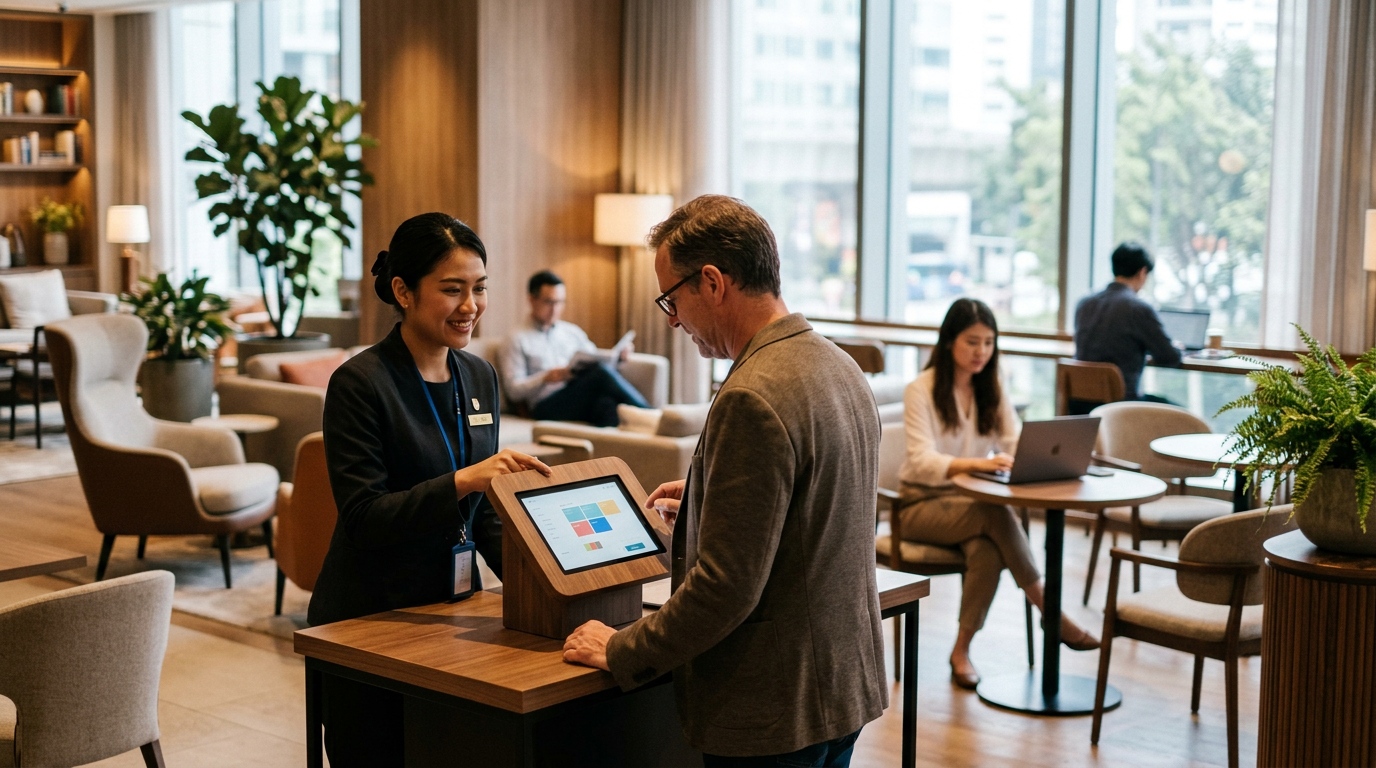
How a Workspace Reservation System Drives Revenue
Revenue levers unlocked by reservation control
Controlling when, where, and how spaces are used opens several high-impact revenue levers:
- Time- and location-based pricing: Charge premiums for peak hours, priority locations (rooftop pods, private AV rooms) and premium amenity bundles.
- Add-on bundling: Link bookings to F&B offers, on-demand baristas, or catering packages—reservation-triggered promotions frequently produce double-digit uplifts in per-booking spend in pilot programs.
- Memberships and subscriptions: Day passes, corporate plans and loyalty tiers generate recurring revenue and increase repeat visitation.
- Operational efficiency: Predictable usage reduces staff time resolving conflicts and improves setup accuracy, lowering cost-per-service and protecting guest satisfaction.
Guest experience and retention impacts
Clear availability, self-service booking, and guaranteed amenities reduce friction and raise perceived value. Reliable reservations free staff from manual conflict resolution and drive higher Net Promoter Scores, longer stays, and referrals.
Designing a Shared Facility Booking System That Fits Hotels
Map spaces, services, and pricing tiers
Start with a complete inventory of common-use assets: business centers, private meeting rooms, co-working tables, lounge zones, and event spaces. Build a tier matrix that standardizes quotes and simplifies upsells.
- Amenity tiers: basic seating, AV, dedicated power & outlets, F&B, private lockable rooms.
- Time-based pricing: off-peak vs. peak, hourly vs. half-day, minimums for evening bookings.
- Priority rules: member pricing, corporate accounts, and negotiated blocks for key clients.
Policies to prevent peak-hour problems
Protect service quality and prevent congestion with enforceable rules:
- Maximum booking durations and mandatory setup/cleanup buffers.
- Cancellation penalties and no-show rules to protect revenue.
- Automated waitlists and priority assignment for loyalty or corporate accounts.
- Real-time conflict detection and automated enforcement inside the workspace reservation system to prevent manual overrides and last-minute disappointment.
Operationalizing Store Operations Space Scheduling
Integrating operations with bookings
Bookings should be workflow triggers. Integrate the reservation system with an IWMS/CAFM layer to auto-create work orders for housekeeping, AV checks, and catering delivery. This reduces missed setups and ensures spaces are ready on time.
Real-world process flows and SOP examples
Document straightforward SOPs for common scenarios and measure outcomes:
- Morning coworking turnover: 15-minute cleaning buffer, checklist for power & Wi‑Fi checks.
- Afternoon small events: AV test 30 minutes before start, standing menu or pre-ordered catering options.
- Evening lounge bookings: F&B minimums, dedicated server assignment, and expedited billing to room folio or card-on-file.
Track utilization, average revenue per booking (RevPPS — revenue per physical space), ancillary attach rate, and on-time setup rate to fine-tune staffing and pricing.
Common Area Reservation Control: Tech, Integrations, and UX
Key features to look for in a common area reservation control solution
- Real-time availability and mobile self-service booking with calendar sync.
- Capacity controls, configurable buffers, and waitlist automation.
- API-first architecture to simplify portfolio-wide scaling and integrations.
- Role-based permissioning to enforce corporate accounts, members, and admin overrides.
- Reporting dashboards for utilization, revenue, and operational KPIs.
Integrations that multiply revenue impact
Tight integrations turn bookings into charges, services, and personalized offers:
- PMS / POS integration: Auto-post charges to room folios, route F&B orders to in-house outlets, and simplify billing reconciliation.
- CRM / loyalty: Enable member pricing, targeted promotions, and segmented campaigns that lift repeat bookings and attach rates.
- IWMS / CAFM: Auto-generate work orders for setup, cleaning, and maintenance.
- Digital signage & smart locks: Frictionless access and clearer wayfinding improve conversion and satisfaction.
Mitigating Peak Conflicts and Maximizing Throughput
Rules, throttles, and dynamic pricing
Use dynamic pricing to smooth demand and throttles to limit concurrent bookings during peak windows. Staggered start times and mandatory buffers maximize throughput while protecting service quality.
Behavioral nudges and promotions to shift demand
Small incentives can produce outsized shifts in demand: targeted discounts, mid-day F&B credits, and direct messaging nudges encourage users into off-peak slots and free premium times for higher-margin bookings.
Measuring ROI and Continuous Improvement
Metrics to monitor revenue impact
Key metrics to measure and iterate on:
- Utilization percentage by space and daypart.
- RevPPS (revenue per physical space) and revenue per booking.
- Ancillary attach rate for F&B and service add-ons.
- Guest satisfaction and NPS linked to reservation experience.
- Forecast demand and run A/B tests on pricing, buffers, and bundles in pilot properties—scale successful variants across the portfolio.
Conclusion
A thoughtfully implemented Workspace Reservation System converts scattered common areas into predictable revenue drivers while improving guest experience and operational efficiency. Combine clear policies, dynamic pricing, and tight integrations with PMS, POS, CRM, and IWMS/CAFM to capture ancillary revenue and reduce friction.
Key Takeaways
- A Workspace Reservation System monetizes common areas with time- and amenity-based pricing to drive ancillary sales and repeat business.
- Operational rules — buffers, maximum durations, and waitlists — prevent peak conflicts and protect service quality.
- PMS, POS, CRM, and IWMS/CAFM integrations automate billing, staffing, and personalized promotions to increase attach rates.
- Measure utilization, RevPPS, and ancillary attach rates; pilot and iterate to refine pricing and policies.




