
How SMS links space, traffic and revenue
Real-time occupancy tracking system for responsive merchandising
Triggered merchandising and staffing for conversion gains
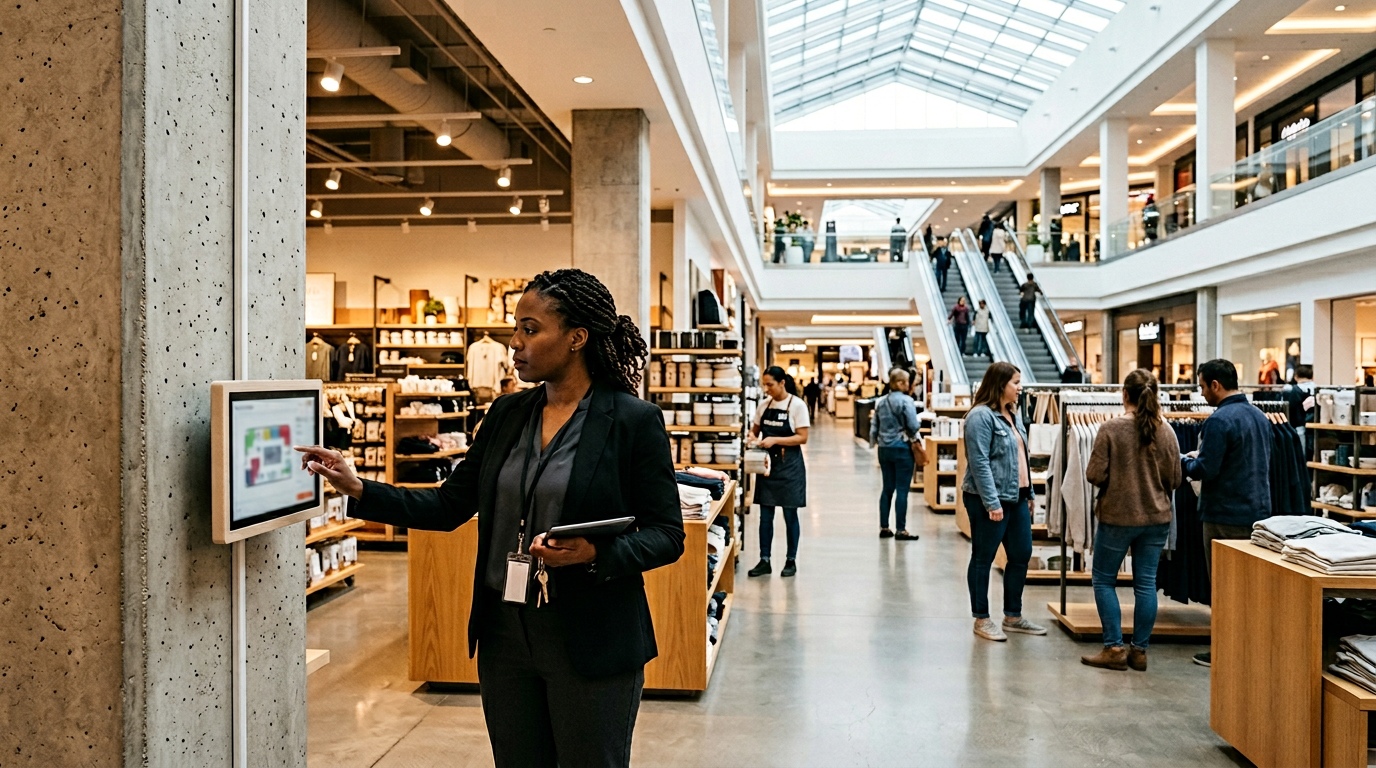
Real-time occupancy data enables immediate merchandising and staffing responses. When sensors register high footfall down a corridor, targeted digital signage or pop-ups can be activated to capture shopper intent. When traffic drops, managers can reduce temporary displays and reallocate staff to higher-value tasks, minimizing inventory exposure and labor cost.
Occupancy feeds also help prevent congestion: temporary fixtures or dynamic staff routing can redistribute traffic, reduce friction and improve conversion. Retailers that align staffing and merchandising to live occupancy commonly report higher same-store conversion during promotions and faster fulfillment performance.
Designing space for maximum revenue uplift
Layout optimization and capacity planning for peak performance
Design decisions should prioritize visibility for high-margin categories and use dwell-time metrics to place impulse and complementary items where customers linger. SMS heatmaps feed capacity-planning tools to ensure circulation remains efficient during peaks — seasonal surges, events, or weekends.
For mixed-use or coworking areas inside malls, capacity planning prevents overbooking experiential zones that could cannibalize adjacent store traffic while maximizing rentable square footage.
Member and VIP zones: a reservation-managed mindset
Treat VIP or member zones like reservation-managed spaces. Exclusive previews, private fittings, and lounges increase basket size and session spend. SMS that supports reservation logic prevents conflicts and measures uplift: compare spend per visit for VIP sessions versus general traffic to quantify the premium value of allocated space.
Operational tactics and technology integration
Shared-workspace utilization lessons for mixed retail spaces
Dynamic bookings for pop-ups, kiosks, and seasonal activations let malls monetize underused areas. Time-segmented rate cards (weekend peak vs weekday off-peak) maximize revenue per sq ft across time slots. Hour-level utilization tracking reveals latent demand and informs pricing and programming.
Integrating SMS with POS, CRM and building systems (practical steps)
To close the optimization loop, integrate SMS with POS and CRM so transactions and customer segments can be matched to space. That enables personalized in-store experiences and targeted promotions for high-value cohorts. Connect occupancy sensors and IoT with CAFM/IWMS for automated HVAC, lighting, and access control to reduce OPEX while improving comfort.
Practical rollout approach:
- Pilot: Link sensor feeds to POS aggregation in 1–3 stores or a mall zone.
- Test: Run a 4–8 week test with A/B layout and staffing variations.
- Measure: Track sales per sq ft, conversion and dwell time.
- Scale: Extend integrations and automate actions based on validated uplift.
Measuring impact and scaling improvements
KPIs, A/B testing and iterative improvements
Key metrics to track:
- Sales per sq ft — primary outcome measure
- Conversion rate and average basket value
- Dwell time by zone
- Occupancy-utilization ratio (productive vs unproductive space)
Use A/B testing across matched stores or mall zones to validate layout and merchandising changes. Document successful playbooks and roll them out with governance for change control and measurement.
Conceptual case example
A mall pilot converts 10% of a department store’s floor into experiential displays for two brands. Over two fortnights the converted area records a 15% increase in sales per sq ft, a 7% rise in average basket size, and improved customer-satisfaction scores. The lift justifies a wider rollout and a new short-term leasing model for experiential partners.
Conclusion
Space Management Software provides a measurable pathway to increase sales per sq ft without expanding footprint or major capital outlay. By mapping shopper behavior to revenue, enabling real-time responses, and integrating with POS/CRM and building systems, retailers and mall operators can systematically convert underused space into profit centers.




