
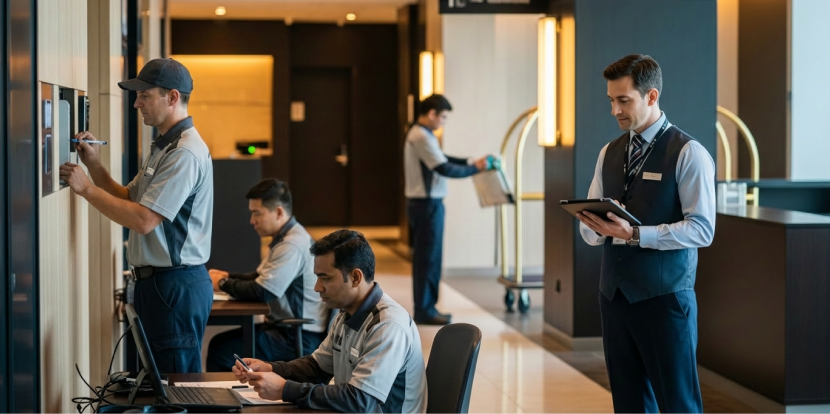
Hotels depend on fast, reliable room turnaround and flawless facilities to protect revenue and reputation. When a guest encounters a broken HVAC unit, a leaking sink, or dim lighting, satisfaction drops immediately — and rooms taken offline for repairs directly impact revenue. A modern facility maintenance software (CMMS) is the lever hotel managers use to reduce outages and turn maintenance into a competitive advantage.
How facility maintenance software reduces room downtime and boosts guest experience
Centralized asset data equips technicians with model numbers, warranty status, and repair history accessible on mobile devices. That context reduces diagnostic time and raises first-time fix rates — lowering mean time to repair (MTTR). The CMMS automates prioritization and routing so guest-impacting issues are escalated to technicians with the right skills and parts.
With mobile updates and real-time status tracking, housekeeping and front desk staff know when a room is ready. That coordination eliminates communication bottlenecks, prevents double-bookings, and improves check-in experiences.
Work order management: Streamline repairs with a modern work order system
Design and execution best practices
A structured work order system saves time and enforces consistency:
- Use templates for common room issues (HVAC, plumbing, electrical) so staff can log problems quickly with the right diagnostic fields.
- Define SLAs and automatic escalations tied to guest commitments (e.g., “room-ready within X hours”) to ensure accountability.
- Track technician ETA, parts used, and time on task to measure efficiency and identify training gaps.
- Integrate work orders with PMS and housekeeping so room release is synchronized: technicians update status in the mobile app, housekeeping receives a release notification, and the PMS reflects availability.
Preventive maintenance strategies using a preventive maintenance system
Planned maintenance is one of the most effective ways to lower unplanned outages. Create preventive schedules for high-risk assets — HVAC systems, boilers, elevators — and apply condition-based triggers such as run-hours, IoT temperature alerts, or vibration sensors to prompt maintenance only when needed. Standardized digital checklists ensure inspections are consistent and create an auditable trail for safety and warranty compliance.
Over time, preventive maintenance reduces emergency repairs and extends asset life, freeing budget for guest-focused improvements.
Maintenance tracking software: visibility, reporting, and KPIs for hotel managers
Good maintenance tracking software turns operational data into actionable insight. Track and report on:
- Downtime hours per room
- MTTR and first-time-fix rate
- Preventive maintenance completion rate and backlog
- Cost per repair and parts inventory turnover
Correlate these KPIs with guest satisfaction metrics (NPS/CSAT) to show the direct effect of maintenance on occupancy and reputation.
Asset maintenance tools: selecting the right features for hotels & resorts
When evaluating CMMS or hotel maintenance software, prioritize:
- Asset registry with photos, precise location mapping, and service history
- Mobile technician app with offline mode and photo attachments
- Work order system with prioritization and SLA rules
- Preventive maintenance module supporting recurring schedules and condition triggers
- Inventory and vendor management, finance integrations, and robust APIs for PMS and housekeeping systems
If you manage multiple properties, choose tools optimized for multi-property rollouts.
Implementation roadmap for hotel managers
Start with an audit: catalogue equipment, common failure modes, and current response times. Pilot the CMMS on a single property or asset class (for example, guest-room HVAC) to prove value quickly. Configure work order types, priorities, and preventive schedules based on real data, and train technicians, housekeeping, and front-desk staff on mobile tools and handoffs. Monitor KPIs, refine processes, and scale after initial wins.
Common obstacles and how to overcome them
Low adoption is often a usability issue: simplify the mobile UI, minimize required fields, and communicate time savings. Improve data quality by investing in asset tagging and importing service histories. For integrations, prioritize PMS and housekeeping synchronization first — these deliver immediate operational benefits — then add vendor and inventory integrations.
Conclusion
Facility maintenance software (CMMS) helps hotel managers reduce room downtime, speed repairs, and improve guest satisfaction by centralizing data, automating work orders, and enabling preventive maintenance. With a focused pilot, clear KPIs, and attention to adoption, maintenance becomes a measurable contributor to occupancy, revenue, and brand reputation.
Key Takeaways
- Centralized CMMS data and mobile work order workflows reduce time-to-repair and lower room downtime.
- Preventive maintenance and condition-based triggers cut unplanned outages and extend asset life.
- Tracking KPIs like downtime, MTTR, preventive completion rate, and guest satisfaction proves ROI.
- Start with a focused pilot, integrate with PMS and housekeeping first, then scale after early wins.
Ready to reduce room downtime?
Call to Action: Discover how our CMMS can help your property reduce room downtime and improve guest satisfaction. Contact us for a free demo to see maintenance tracking, work order management, and preventive scheduling in action.




