
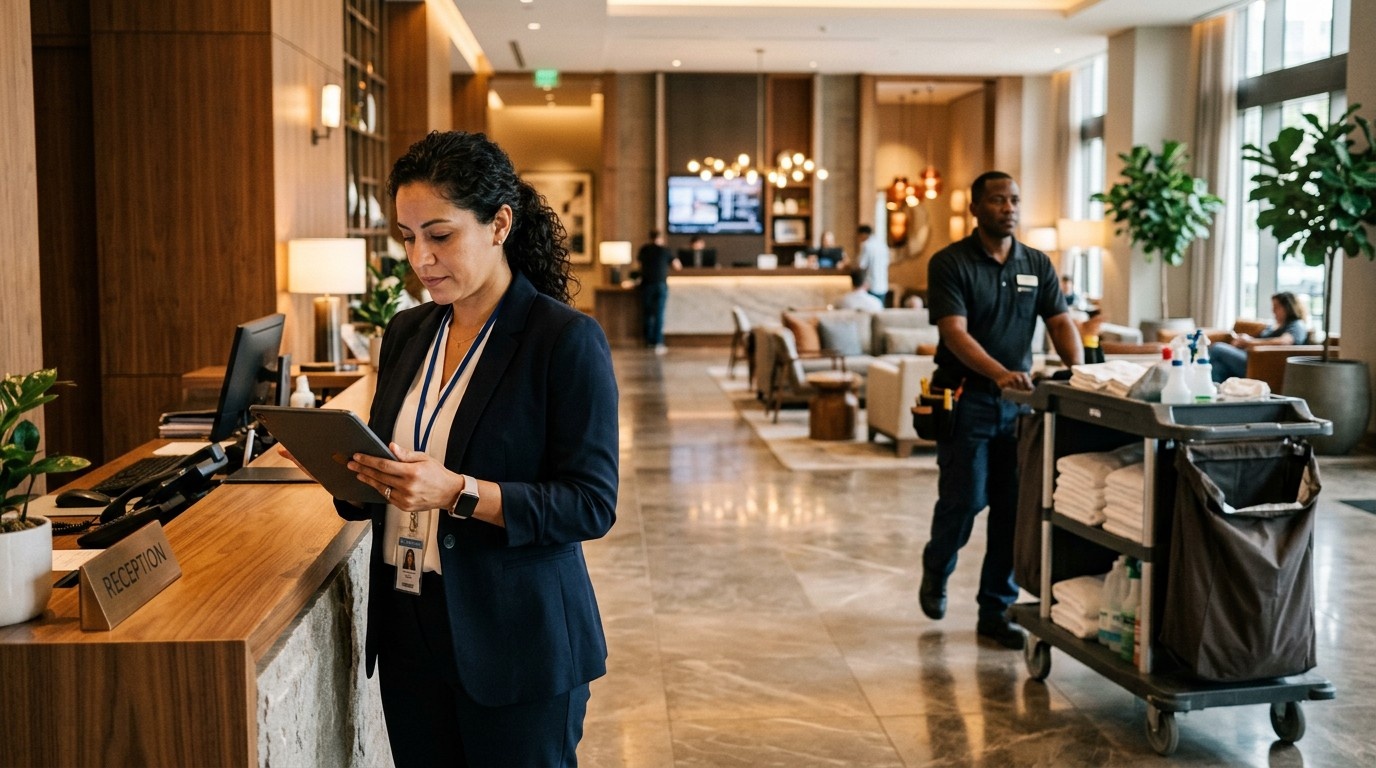
Computer aided facility management software centralizes hotel asset records, automates work orders, and integrates with PMS/BMS and IoT to reduce downtime, lower costs, and protect guest experience.
Introduction
Modern hotels rely on uninterrupted facility performance to protect brand reputation and revenue. When HVAC fails, an elevator stalls, or a guest room fixture is out of service, the effect is immediate: poor reviews, lost bookings, and expensive emergency repairs. A purpose-built digital facility maintenance platform—also called CAFM—moves hotels from reactive firefighting to proactive, data-driven maintenance by providing visibility, mobile workflows, and analytics.
What is computer aided facility management software?
Key components and how it works
At its core, computer aided facility management software maintains an accurate asset hierarchy (property → floor → room → equipment), records warranties and maintenance histories, and manages the full work-order lifecycle. Critical integrations convert guest complaints into prioritized tickets, ingest BMS/IoT fault alerts, and synchronize inventory and procurement so technicians have the right parts when they arrive.
Cloud deployment and native mobile apps empower engineering teams, housekeeping, and third‑party vendors to update tasks, capture photos, and complete inspections in real time—turning fragmented maintenance activity into coordinated operations.
Core features hotels need
Facility asset maintenance tracking and building maintenance tracking
Effective facility asset maintenance tracking requires a complete, validated asset ledger and lifecycle tracking for guest rooms, FFE (furniture, fixtures & equipment), HVAC plant, and back‑of‑house systems. Key capabilities include:
- Asset tagging (QR, barcode, or RFID) linked to maintenance histories and parts lists
- Mobile inspection checklists and condition assessments to standardize reporting
- Recurring work orders for scheduled preventive maintenance (PM)
- Downtime logging tied to occupancy impact and guest experience
- Vendor performance and contract compliance tracking
Digital facility maintenance platform capabilities
Look for a platform that supports rapid work‑order creation—triggered by guests via PMS, front‑desk staff, or automated IoT alerts—with configurable prioritization and SLA management. Essential features:
- Mobile-first work orders with attachments, photos, and digital signoffs
- Inventory and spare-parts management with reorder points
- Dashboards and analytics: downtime trends, MTTR, first‑time fix rate, and PM compliance
- Integration readiness for PMS, BMS, and procurement systems
Benefits for hotels: operational, financial and guest‑experience gains
How the platform improves day‑to‑day operations
A CAFM platform reduces response times and increases first‑time fix rates. With mobile access, technicians arrive with the correct documentation and parts; with digital handoffs between housekeeping and engineering, rooms are returned to service faster. Scheduled PM reduces emergency failures and minimizes disruption during peak occupancy.
Financial and compliance benefits
Consolidated maintenance data lowers total cost of ownership by enabling predictive maintenance to extend asset life, optimizing spare-parts inventory to reduce holding costs, and reducing emergency calls (and overtime). Centralized records also simplify audits and compliance reporting for safety inspections and local regulations, and give finance teams accurate lifecycle and depreciation data for CAPEX planning.
How to choose the right system (evaluation & procurement)
Selection checklist for hotel managers
When evaluating vendors, require these core capabilities:
- Work‑order management with mobile tasking and SLA automation
- Preventive maintenance scheduling and compliance reporting
- An accurate, searchable asset ledger with tagging support
- Native mobile apps for multi‑shift teams and third‑party vendors
- Prebuilt or documented integrations for PMS, BMS, and procurement
- Onboarding, training, and support that fit hotel operations
Implementation best practices for hotels
Use a phased approach to reduce disruption and accelerate measurable value:
- Start with a pilot focused on high‑impact assets (HVAC, boilers, elevators) and a representative set of guest rooms to validate workflows.
- Physically validate and tag assets during phased data migration to create a trusted asset register.
- Train technicians, supervisors, and housekeeping on role‑based mobile workflows and digital handoffs.
- Track KPIs such as response time, first‑time fix rate, PM compliance, mean time to repair (MTTR), and cost per work order.
Measuring success: recommended KPIs
- Response time for guest‑facing work orders
- First‑time fix rate
- Preventive maintenance compliance percentage
- Mean time to repair (MTTR)
- Downtime impact on occupancy or revenue
- Cost per work order and spare‑parts spend
Key takeaways
- A centralized computer aided facility management software transforms reactive hotel maintenance into proactive, data‑driven operations that improve uptime and guest satisfaction.
- Essential features include asset maintenance tracking, mobile work orders, preventive maintenance scheduling, and vendor/inventory integration to optimize first‑time fix rates and reduce emergency spend.
- Prioritize PMS and BMS integrations, pilot the platform for high‑impact assets, and measure KPIs (response time, MTTR, PM compliance) to accelerate ROI and inform rollouts across your estate.
Conclusion & Call to Action
Implementing a purpose‑built CAFM solution gives hotels the visibility and control needed to protect guest experience and reduce maintenance spend. By centralizing asset records, automating work orders, and integrating with PMS/BMS and IoT, hotel operators can shift from reactive maintenance to proactive asset stewardship.
Discover how eFACiLiTY® can help optimize and transform your facility management operations with intelligent automation, real‑time insights, and scalable solutions. Contact the eFACiLiTY team today to schedule a demo and see smart facility management in action.




