
Introduction
Hotels depend on reliable facilities to protect revenue and deliver consistent guest satisfaction. When elevators stall, HVAC underperforms, or kitchen equipment fails, the guest experience and profitability suffer immediately. Computer Aided Facility Management (CAFM) gives hotels the structure and visibility needed to move from reactive firefighting to strategic, guest-focused operations.
This article explains how CAFM and a modern digital facility maintenance platform centralize maintenance workflows, reduce guest impact, and control lifecycle costs. You’ll find practical guidance for selecting the right software, rolling it out across properties, tracking assets, and measuring ROI so maintenance becomes predictable, measurable, and aligned with hospitality priorities.
Computer Aided Facility Management in hotels: overview & benefits
What CAFM delivers for hotel operations
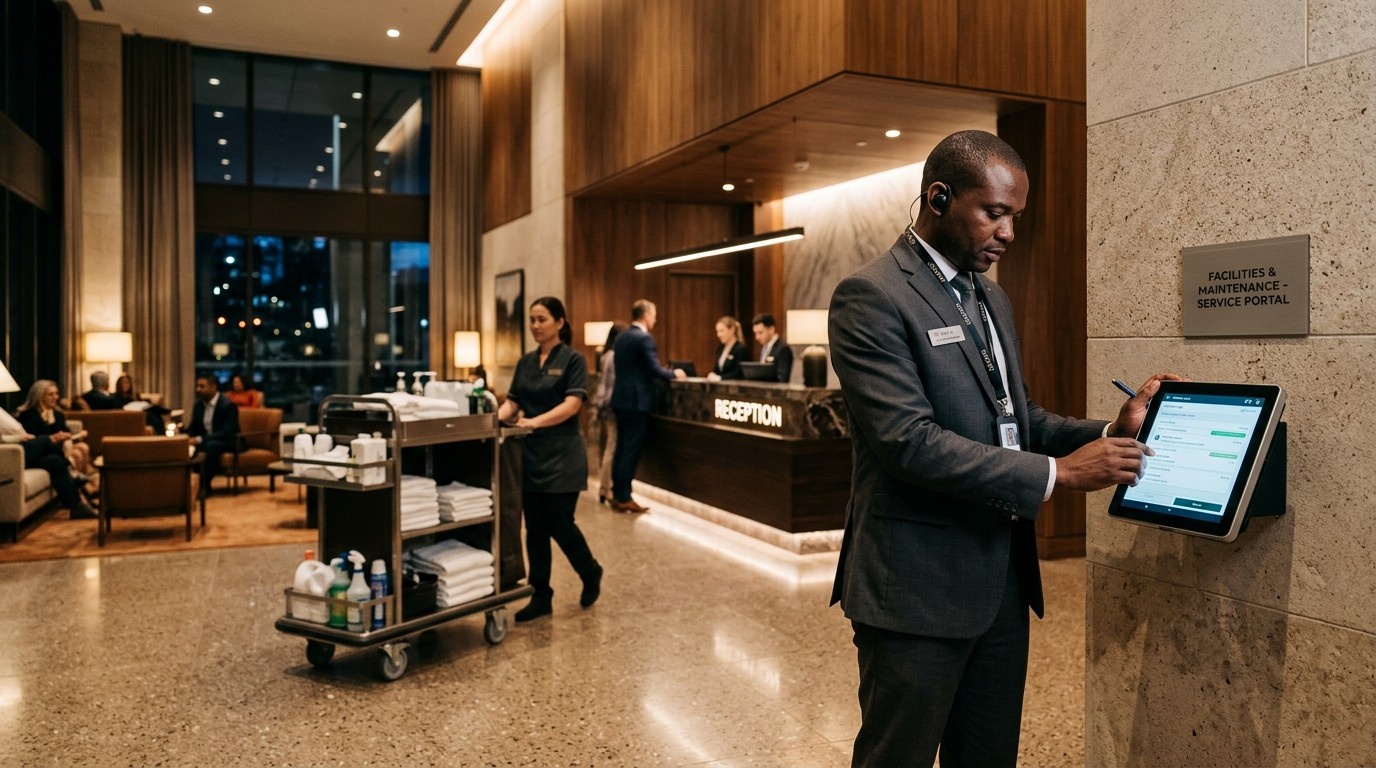
CAFM consolidates maintenance activities into a single source of truth. For hotels, that means centralized work order creation, preventive maintenance scheduling, and real-time visibility into open jobs across guest rooms, F&B outlets, pools, HVAC systems, and lifts. Mobile technician apps ensure frontline staff can receive, update, and close work orders from anywhere on property, shortening response times and improving SLA compliance.
Beyond faster fixes, CAFM enables data-driven decision-making. Service history, parts consumption, and failure patterns feed lifecycle cost models that inform prioritized capital planning. For example, combining PM completion rates with failure frequency helps decide whether to repair or replace an aging split system; scheduling maintenance around occupancy minimizes guest disruption.
Selecting the right digital facility maintenance platform
Evaluate features that matter for hotels
Not all platforms are built for hospitality. Require these capabilities during evaluation:
- Mobile technician apps with offline capabilities so engineers can work in basements or remote service yards without losing data.
- Guest-impact prioritization and SLA-driven work orders so front-desk and engineering teams apply the correct urgency to issues affecting occupied rooms, VIPs, or revenue centers.
- Integrations with the property management system (PMS), energy management systems, and room controls so occupancy and energy events can trigger maintenance workflows and reduce room downtime.
- Dashboards that support occupancy-based maintenance planning and smooth shift handovers.
Evaluate vendors on real-world hospitality deployments, uptime guarantees, and an IoT roadmap. A platform that can expand from QR/NFC scanning to full IoT-driven condition monitoring preserves your investment.
Implementing building maintenance tracking software effectively
Rollout & change management steps
A phased rollout reduces risk and builds momentum:
- Phase 1 — Audit and standardize: perform a complete asset audit and create a standardized asset hierarchy (building > floor > room > asset) to ensure consistent reporting across properties and vendors.
- Phase 2 — Migrate and schedule: import historical work orders, preventive maintenance (PM) plans, and vendor contracts. Use the first 90 days to clean data and set realistic PM intervals.
- Phase 3 — Train and pilot: train engineering, housekeeping, and front-desk staff. Pilot the system on high-impact zones (guest rooms, kitchens) where uptime directly affects revenue, then iterate on templates and SLAs before scaling.
Track KPIs during rollout: mean time to repair (MTTR), PM completion rate, technician utilization, and guest complaint reductions tied to maintenance issues. Regular stakeholder check-ins keep rollout aligned to operational realities.
Facility asset maintenance tracking: data & lifecycle strategies
How to track assets for cost control and reliability
Effective asset tracking starts with tagging — QR, NFC, or RFID depending on scale and environment — and linking each tag to warranties, manuals, and service history in the CAFM. Single-click access speeds diagnostics and ensures technicians use correct parts.
Move from calendar-based to condition-based maintenance by combining inspection records with sensor data. For example, vibration sensors on chillers or real-time energy monitoring on rooftop units can trigger work orders only when performance deviates from baseline. This reduces unnecessary PM labor while catching issues earlier.
Include financial tracking: capture capex vs. opex, depreciation schedules, and disposal triggers so finance can evaluate total cost of ownership and make replacement decisions that protect service levels and EBITDA.
Facility maintenance planning platform: best practices & workflows
Operational rules and automation to reduce guest impact
Define rules that automatically prioritize tasks by occupancy status, guest type (e.g., VIP), and allowable intervention windows (for example, avoid room interventions between 7–10 p.m.). Automate recurring PMs, parts reorder triggers, and vendor dispatching to reduce administrative overhead and stockouts.
Implement escalation paths so unresolved issues route to supervisors with full historical context. Provide real-time, templated guest communications for incidents that affect stays; consistent messaging helps maintain guest trust during unavoidable maintenance events.
Measuring ROI & continuous improvement
Metrics and governance for sustained gains
Measure savings from fewer emergency repairs, extended asset life, and reduced energy use. Maintain a governance cadence — monthly reviews of backlog, technician productivity, PM compliance, and guest-impact incidents — and apply root-cause analysis to convert recurring failures into design changes or process improvements. Over time, these reviews reduce reactive work, lower lifecycle costs, and improve guest satisfaction scores.
Conclusion
A disciplined Computer Aided Facility Management program transforms hotel operations by centralizing maintenance, reducing guest impact, and making lifecycle costs visible and actionable. Paired with the right digital platform and robust asset strategies, CAFM helps hotels shift from reactive repairs to condition-based, proactive maintenance that protects revenue and elevates guest experience.
Key Takeaways
- Implementing Computer-Aided Facility Management centralizes maintenance operations, shortens response times, and reduces guest impact through SLA-driven work orders.
- Select platforms with mobility, PMS, and energy-system integrations, and automation to scale operations efficiently.
- Deploy in phases — asset audit, data migration, and PM setup, then pilot and scale — to reduce risk and accelerate adoption.
- Asset tagging and condition-based triggers move maintenance from calendar-driven to performance-driven, lowering opex and extending asset life.
- Regular governance and metric-driven reviews convert recurring issues into design or process fixes, delivering measurable ROI in emergency repair reduction, energy savings, and improved guest satisfaction.




