
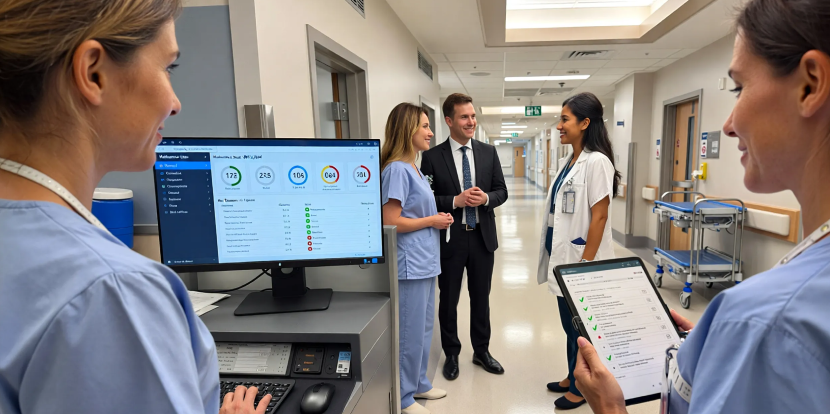
Hospitals face heightened regulatory scrutiny while managing complex clinical infrastructure. Computer aided facility management (CAFM) centralizes asset histories, automates routine tasks, and produces auditor‑ready evidence so maintenance teams can focus on preventive work rather than chasing paperwork.
How CAFM reduces compliance risk
Centralized compliance records and version control
A CAFM platform becomes the single source of truth for asset histories — from medical gas manifolds to emergency generators. With structured records, version control, and audit trails, facilities can demonstrate timelines and custodianship during inspections. Automated retention policies and permissioned access help satisfy jurisdictional recordkeeping rules.
Automated alerts, scheduling, and tamper‑resistant documentation
Regulatory deadlines often map to preventive maintenance tasks. CAFM systems connect scheduling, notifications, and digital work orders so tasks are triggered proactively. Time‑stamped records, photos, certificates, and e‑signatures create contextual evidence that’s hard to dispute and reduces fines or forced closures.
Accelerating audit responses with CAFM
Rapid report generation and standardized templates
Prebuilt compliance templates let teams generate equipment certification summaries, safety logs, and audit packages on demand. Because reports pull live data, maintenance supervisors can export consistent, formatted evidence to auditors in minutes instead of days.
On‑demand dashboards and mobile evidence capture
Real‑time dashboards surface KPIs like compliance rate, overdue tasks, and upcoming deadlines. Mobile access enables technicians to capture photos, annotate, and attach documentation directly to assets — preserving a continuous chain of custody.
Digital facility mapping & facility planning software
Location‑based evidence with digital maps and BIM
Integrating floorplans and BIM overlays with CAFM transforms textual records into visual proof. Auditors can quickly verify the physical location of critical equipment and system relationships during walkthroughs.
Space and asset planning to close regulatory gaps
Facility planning tools model redundancy and capacity, helping teams test scenarios (e.g., converting rooms to negative pressure) and identify compliance gaps before inspections.
Best practices for CAFM implementation in hospitals
- Prioritize high‑risk systems: Start with medical gas, HVAC for critical care, and life‑safety systems.
- Stakeholder alignment: Involve clinical engineering, infection control, facilities, and IT early.
- Data hygiene & integrations: Cleanse asset records; integrate CMMS, BMS, and EHR where appropriate.
- Change management: Role‑based training, mobile checklists, and periodic audits drive adoption.
KPIs and measuring ROI
Track audit response time, percent compliant assets, overdue tasks, MTTR, and avoided penalties. Convert time savings and reduced downtime into financial terms to make a persuasive ROI case for leadership.
Conclusion
Computer aided facility management (CAFM), paired with digital facility mapping and disciplined implementation, centralizes compliance evidence and accelerates audit responses. This reduces regulatory risk and frees maintenance teams to focus on preventive and strategic initiatives.
Key Takeaways
- CAFM provides a single source of truth for asset histories and inspection logs.
- Digital mapping and planning speed audits and reveal regulatory gaps.
- Successful adoption requires clean data, integrations, stakeholder buy‑in, and role‑based training.
Discover how eFACiLiTY’s CAFM solution can centralize your compliance records and accelerate audit responses. Contact us today for a free demo tailored to hospitals and clinics.




